Thursday, May 1, 2014

Where mountains touch the sky

Mother's bathing pool

There is no place better to start our tour of Nepal than Lumbini, the birthplace of Buddha. The shrines and temples surrounding his birthplace are friendly, happy and serene places. A large square pond marks where his mother stopped to bathe. People would walk around this pond, stopping every couple of steps to crouch down and touch the ground. Behind it was a large tree festooned with flags leading off colourfully in all directions, each colour representing a different facet of the natural world. For instance green represented grass and white was for the sky. Around the tree were monks praying and people joining in or just watching. The whole complex was a monument for peace, with many temples from different countries and an eternal flame reminiscent of the one we saw in Hiroshima.


The perpetual Dhal Bhat
We were also introduced to their national dish, Dhal Bhat. Seriously, it seems that most people here eat it every day for lunch and dinner. It consists of rice, lentil soup, veg curry, something pickled, fresh veg or spinach and sometimes yoghurt for dessert. It's an 'all you can eat' meal, as they'll keep coming back and filling up until you plead, 'No more'. We all became very familiar with Dhal Bhat. We also had to adjust to continual rolling blackouts. Most areas are only given power about a third of the time to conserve hydro-electricity in the dry season. (No problems during monsoon when they have enough left over to sell to India.) There's a Nepal wide roster and a website that tells you which area has power when. This resulted in a rush for power points to charge phones and computers whenever the electricity came back on.


Suitably relaxed we travelled next to Chitwan, home of a large national park. We all opted for a walking safari which started with a ride on the river in a concerningly narrow canoe sitting extremely low in the crocodile filled water. Although it felt like it could topple over at any second, it was remarkably stable, even staying upright through several small rapids, although we did get a bit wet. What I remember most is the sheer absence of noise: no traffic, no motor boats, just the tranquility of our boat moving almost silently under human power through the water, and the sounds of wildlife and wind.

Our guide Bishnu
Eventually we were deposited on the bank far downstream, the challenge now to return on foot through the jungle. We were quickly given instructions on what to do if we came across wild animals; rhinos, tigers, boars and bears are active in this area. Elizabeth and I stopped for a quick natural toilet break, which became stressful when the rest of the group returned at a fast pace having come across a rhino almost immediately at close quarters. We barely escaped with our dignity intact and joined the group for a hasty retreat.

Rhinos seemed to be the order of the day; we came across another one a bit further up. This time though we were high on the bank and he/she was in the water. We watched in relative safety for quite a while filling our memory cards with pictures. We spent the next few hours trekking through the most beautiful jungle scenery with a guide who seemed self styled on Crocodile Dundee. Some of the interesting moments from Bishnu include...
* Found tiger scratchings on the bark of a tree.
* Found a spot with fresh tiger urine. We were all invited to smell. I politely declined. The smell of tiger urine is not something I need saved in my memory cells.
* Tiger paw print, with an explanation of how to use the size of the paw print to calculate the tiger's height.
* Numerous monkeys and deer thanks to his keen eye.
* A pair of rhinos. This time we snuck around them for a better view but hightailed it out of there when one of the rhinos started circling us.

The tiger is how big?


Bio gas well
It was a thoroughly enjoyable experience. Other activities included a visit to an elephant breeding ground, which included a walk through a farming village. They are encouraged here to practise sustainable and environmentally friendly living and farming through grants. Again we saw the versatility of the eminently renewable cow dung. In one house cow dung was put in a well in the ground and used to produce gas for cooking. The major crop here is rice, which is produced year round thanks to plenty of underground water with the wells to access it.


Relaxing at Australia Camp, cold & grey
After leaving here we went to Pokhara where we embarked on a two day trek of the Annapurna foothills. This began with a gruelling trek uphill, completing the day over 1km higher than when we started, at the fantastic Australia camp. No Australians living here now but Australians got here first. Weather was dodgy as we arrived and a decent view of the mountains was looking unlikely. We sat down to hot coffee and freshly deep fried sal roti (a big fatty rice doughnut that I became very fond of).

Less than an hour after we arrived a sudden storm hit with hail the size of golf balls; glad we were not out trekking. Just as suddenly it stopped, the skies cleared and we got awesome views of the Annapurna Himalayan mountain range. We all relaxed and enjoyed the views, sat down to some hearty dhal bhat for dinner and whiled away the night playing the card game Bullshit. We found out our guide was really good at it. At bedtime the girls' screams alerted us to an apparent humungous tarantula in their room. Some men braver than me went to investigate and came back laughing at how small it was and claiming they'd chucked it out. Unconvinced, the girls slept with their beds pushed together in the centre of the room.


Skies begin to clear
Ahhh, beautiful


The next day was a longer and harder trek but took us through some lovely villages with friendly people. Unfortunately previous visitors have not heeded the government's request to not give sweets or money to the children as a familar cry was, 'What's your name? Where are you from? Give me sweets!' We finished the day at a popular paragliding location where three of our group paraglided down the next day to Pokhara while the rest of us took a van. We spent the next day checking out the sights in Pokhara and pampering ourselves with post-trek massages. A tourist town, Pokhara had plenty of ways to relax before our gruelling bus trip to Kathmandu.

Pictures from the trek...

Reaching the top at Australia Camp

Sunrise the next morning


If there is a cat around...

The whole gang


Sunday, April 20, 2014

Luxury, life, and death on the Ganges


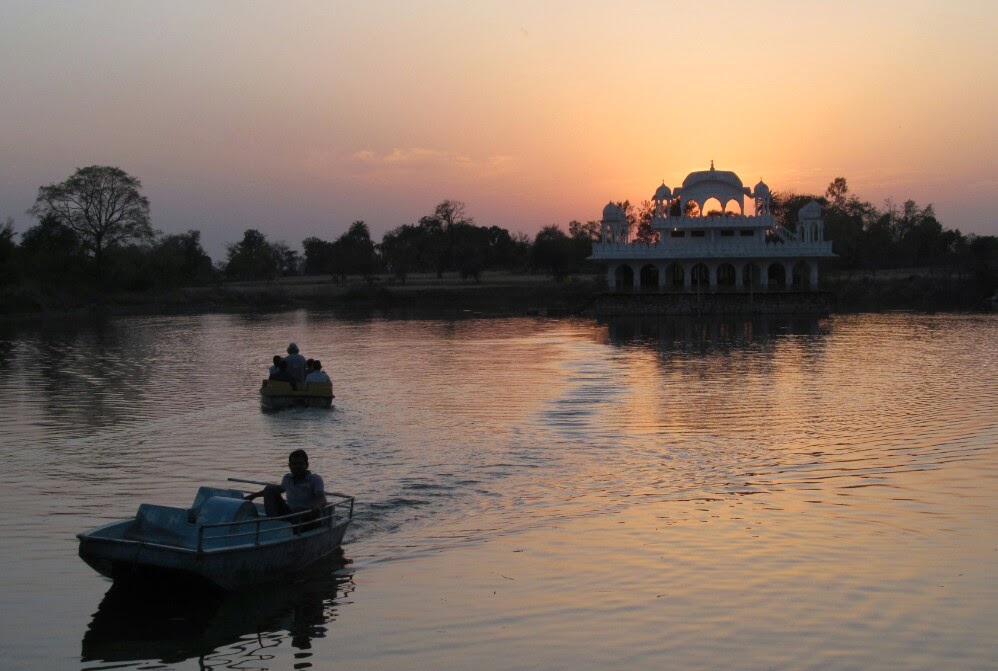
It was time for a little bit of royal luxury in our lives but we were surprised at the extremes we were in for when we decided as a group to stay at the Hammeer Garhi Heritage Resort. A mini fortress, it was built over 350 years ago and surrounded by a settlement now called Basari. The resort was fabulous: 4 poster beds, private balconies, lush dining room and halls, chandeliers, courtyard garden. Everything you would expect, it even had a lake behind it with a small palace in the middle that you can boat to for chai tea while watching the sunset.

Water by hand pump
In stark contrast the tiny village of Basari was a step into a past of mud brick houses and thatched roofs, with people living mostly as they would have hundreds of years ago. Water was obtained either from large open wells using a bucket or by hand pump. The caste system here is well entrenched with different living areas for the different castes with correspondingly different quality housing and water supply. There were few modern conveniences in evidence, but some children told me about the brands of computers they have.

Bishal demonstrating the difference between a
dried out cow pat and a fresh one.
We had a brilliant afternoon wandering around this village and trying to get to know about their way of life. The village was surprisingly clean (compared to most of India), and there were many cow pats drying in corners everywhere. A very renewable resource, cow poo is used for many purposes including as paint on the walls, small fires for repelling mosquitoes and as a fuel. Temperatures here can reach the high 40's so the walls and doors of many houses are very thick and without windows. Houses mostly consist of just one or two rooms with no aircon or fans.


The people were very friendly and as curious about us as we were about them, especially the children, who came running from all directions and basically mobbed Elizabeth. Next thing I know she is riding a bike and wielding a cricket bat. (This was the day after India thrashed Australia so I think they were saying even a girl can play better cricket than the Australian cricket team.) Being teachers we asked them lots of questions about their ages and their schooling, and finished up playing a very shonky game of cricket that the children seemed to be taking way too seriously... We ate a sumptuous Indian dinner and danced the night away.


Umm are you guys supposed to be on the roof?

Dancing at the resort


Feel free to click on and
zoom in...

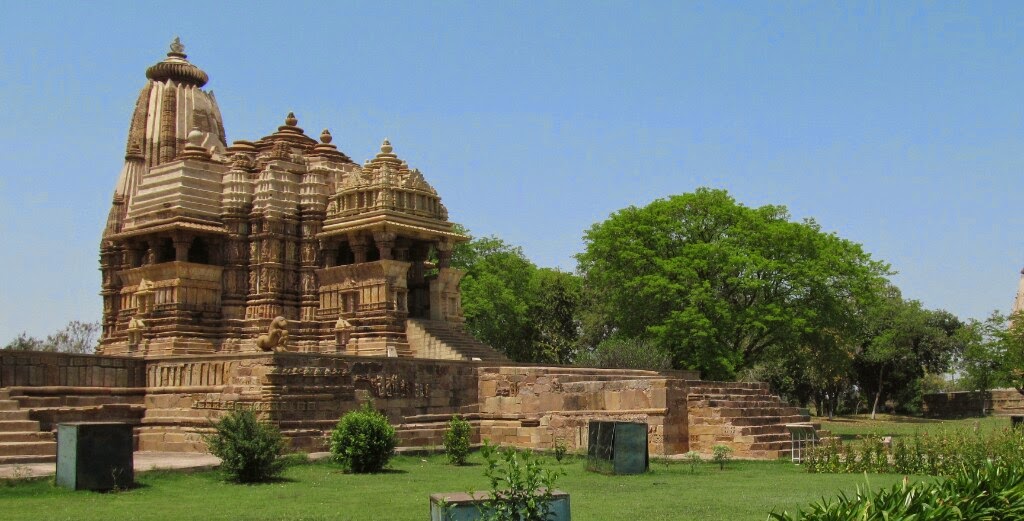
The next morning we reluctantly left for our trip to Varanasi and the river Ganges. On the way we stopped at Khajuraho, famous for its Hindu and Jain temples that are over 1,000 years old and covered in carvings depicting scenes from ordinary life. About 10 per cent of the carvings are of a very sexual nature so there is a huge focus here on Kama Sutra and Tantric paraphernalia and souvenirs. The temples themselves are amazing to look at and the carvings intricate and well done. We had a very funny tour guide who had a dry sense of humour and seemed unembarrassable (unlike most of us). After a very busy day we boarded a train for our overnight journey to Varanasi.

Our last stop in India, the city of Varanasi was a prime (if not the best) example of the frenetic way of life we had come to expect in most of India: insane traffic, numerous lumbering cows, never ending heat and dust and noise. One of the holiest and oldest continuously inhabited cities in India, death here is supposed to bring salvation.  But if we thought the city was an assault on the senses the river Ganges declared war on them.


The Ganges is India's most sacred river. The Indians bathe in it, wash their clothes and animals in it, drink from it, pray along it and scatter their ashes in it. Not sure if drinking and bathing is a good idea when according to Wikipedia it is the fifth most polluted river in the world. We went for a wander along the shoreline watching the throngs of people carry on their daily lives. We came upon a small funeral pyre at a traditional cremation site (there are different sites for different castes). Three wrapped bodies were being brought down to the site to await their turn at instant salvation.


Towards sunset we boarded a small wooden boat, one of hundreds all clustered together. Our oarsman lost his oar and bounded across several boats to retrieve it. I videoed it so will post it below if internet allows :-) The trip up river left most of us speechless. As we approached one of the main cremation sites where several funeral pyres were at different stages of completion the smell, the smoke and the realisation of what was happening was something none of us had ever encountered before. We watched as a shrouded body was brought down and prepared for burning. As the sun fell an eerie quiet twilight descended on us punctuated by the flames from the receding fires and tempered by the billowing smoke. Just writing about it brings back memories that make me melancholy again. This goes on 24/7.


Our boat reclustered with the others as we approached the shore, and we watched one of the religious ceremonies that occur at several points along the river every night. Just before the ceremonies ended our driver manouvered our boat around several others in the queue. He then directed us on to another boat as a stepping stone to reach the shore and join the massive crowds escaping these overpowering scenes before the rush.

Despite our boat driver's helpful queue jumping it took us an hour to walk back to our hotel as all rickshaws both human and motor powered were already taken. We felt decidedly punch drunk as we dodged cows, cars, bikes, dogs and other people on narrow noisy streets full of fumes and blaring horns. By the time we arrived 'home' we were praying for a different kind of salvation, the anticipated salvation of neighbouring Nepal.

I love all the random animal scenes you
come across in India
The river Ganges


Video of boat driver fetching oar

Sunday, April 13, 2014

Love and the Taj Mahal


Obligatory crazy shot
(jumping is no longer allowed)
Next stop on our tour of India was Agra, which at its high point was capital of the Mughal empire. Its main claim to fame now is as the location of the Taj Mahal. Built in 1653 by Shah Jahan, it took 22 years and 20,000 workers to create this white marble monument to his favourite wife Mumtaz Mahal. They are now laid together inside this mausoleum. I expected a single building that you could see from the street but instead I found a whole complex surrounded by large walls and flanked on both sides by temples to complete the Taj's symmetry. It does take your breath away as you enter through large ancient doors and the Taj is revealed step by step in all its glory, beautifully presented with a leading foreground of ponds and gardens.


Shah Jahan's prison
Seen outside Fatehpur Sikri

Agra has many other impressive archaeological sites including the Agra Fort, where Shah Jahan was imprisoned until his death by his son in a magnificent area of the palace overlooking the Taj. We were told that this was because he wanted to build a black onyx Taj and his son thought this excessive and wasteful. He was right of course, but it would have been amazing. We also went to see Fatehpur Sikri (another fort), which was the capital at one stage but abandoned due to a lack of water. It's incredible how many local people want to take photos with you and turnabout became fair play when I was dared to ask a group of sari dressed girls if I could have my picture taken with them. They very kindly agreed.


From there we left the frenetic cities for the more rural towns to get a feeling for Indian country life, travelling first to the small town of Orchha of around 9,000 people. The difference was palpable as the streets were cleaner and quieter and the town had a much more tranquil feel about it. It still had the requisite fort and accompanying palace (Raja Mahal), but straight behind the first palace is a second palace Jahangir Mahal. It was built by the then ruler Vir Singh Deo in honour of his friend the Mughal king Jahangir. It apparently took decades to build and was only used for one night. Hmmm, more money than sense.

View from the palace
We took a pleasant walk around the fort to the river and had our first morning run since Mexico. The palaces would be a great location for a 5km park run (2 laps around the perimeter). It was strange to see the river being used simultaneously for rafting, swimming, washing clothes and bathing, where they soap themselves up before rinsing in the river. The views from anywhere in this place are fantastic as the awesome scenery is complemented by the many temples, palaces and cenotaphs.


The girls making Chapati
Enjoying our meal
One of our most interesting experiences was when we had dinner with a local family, the husband being an autocycle rickshaw driver. It was really nice of them to open up their home to us, and our tour group girls helped make chapatis for dinner. We watched cricket with their boys (the 20/20 India vs Australia match - we were thrashed) and then ate a delicious meal of rice, tandoori chicken, salad, lentil soup and veg curry. As teachers we were disappointed to learn that their 15 year old daughter had recently given up high school because it had been decided that the school was too far to go (15km). Literacy is at 64% for boys but only 42% for girls (courtesy Wikipedia). It will take a long time for their traditional values to change.

This was a refreshing inclusion in the itinerary and even smaller villages were coming up.

Some random photos from Orchha


Monkey business at the fort


Our early morning run